

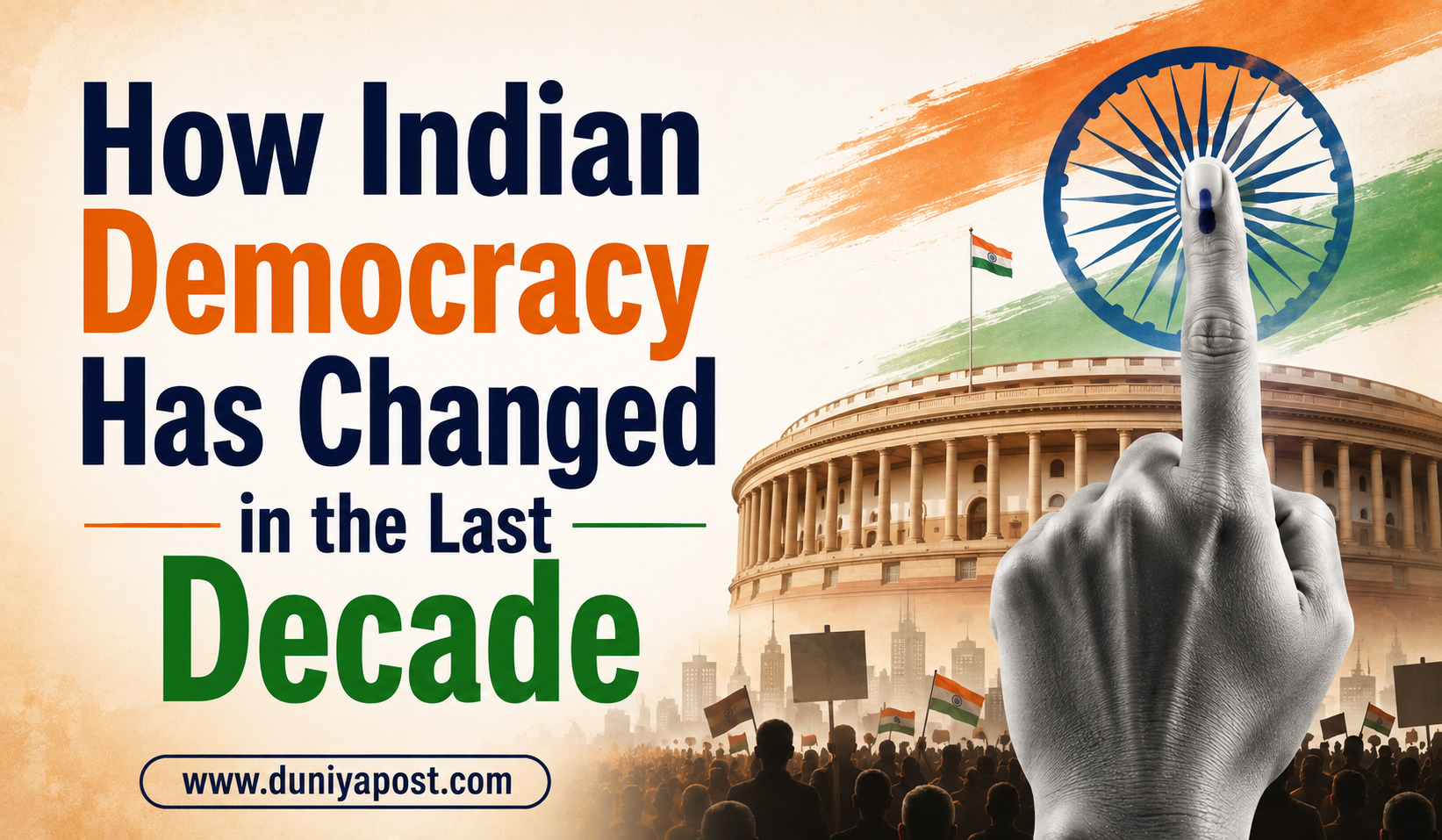
India’s democracy has always been a reflection of its diversity, with people from different regions, cultures, religions, and languages participating in the country’s political process. As the world’s largest democracy, India has experienced continuous political and social change since independence. However, the last decade has been particularly transformative. Rapid technological progress, changing voter expectations, economic reforms, stronger digital governance, and evolving political communication have all influenced the way democracy functions today.
Democracy is not limited to elections. It also includes public participation, institutional accountability, freedom of expression, policymaking, and the relationship between citizens and the government. Over the past ten years, these aspects have evolved significantly, creating new opportunities while also raising important questions about the future of democratic governance.
Technology Has Changed the Way Government Connects with Citizens
One of the biggest changes in Indian democracy has been the increasing use of technology in governance. A decade ago, many government services required people to visit government offices, fill out paperwork, and wait weeks for approvals. Today, many of these services are available online, making governance faster and more accessible.
Digital platforms have simplified processes such as paying taxes, applying for certificates, receiving welfare benefits, and accessing public information. This shift has improved efficiency and reduced delays in many government departments. Citizens can also submit complaints and track applications without repeatedly visiting offices.
At the same time, the expansion of digital governance has sparked discussions about data privacy, cybersecurity, and the need to ensure that people in remote areas are not left behind due to limited internet access.
Elections Have Become More Sophisticated
India continues to conduct one of the largest electoral exercises in the world, but election campaigns today look very different from those of a decade ago. Political parties now rely heavily on data analysis, digital communication, and targeted outreach to connect with voters.
Social media has become a central part of election campaigns. Political leaders regularly interact with the public through online platforms, share policy updates, broadcast speeches, and respond to current events almost instantly. Campaigns that once depended mainly on rallies and television advertisements now combine traditional methods with digital strategies.
The Election Commission has also embraced technology to improve voter awareness and streamline election management. As a result, elections have become more organized and information is more easily available to voters than ever before.
Social Media Has Expanded Political Participation
Perhaps no development has changed Indian democracy more visibly than the rise of social media. Millions of Indians now discuss politics every day through digital platforms, creating a space where news, opinions, debates, and campaigns spread within minutes.
This has made political participation more immediate. Citizens no longer have to wait for newspapers or television debates to express their views. They can directly question leaders, discuss government policies, and participate in public conversations online.
The rapid spread of misinformation, edited videos, and unverified claims has made it more difficult for people to distinguish facts from false narratives. As a result, media literacy and responsible online engagement have become increasingly important for maintaining healthy democratic debate.
Citizens Are More Informed Than Before
Access to affordable smartphones and internet services has made political information available to a much larger population. Parliamentary discussions, government announcements, policy documents, and election updates are now accessible with just a few clicks.
Today’s voters are more likely to research political issues before forming opinions. Young people, in particular, actively follow discussions on employment, education, economic growth, environmental policies, healthcare, and international relations.
This increased awareness has encouraged citizens to participate beyond election day. Public consultations, online petitions, awareness campaigns, and community initiatives have become more common, showing that democratic participation now extends far beyond casting a vote.
Governance Has Become More Centralized
Another noticeable change during the last decade has been the perception of stronger central leadership in policymaking. Several major national initiatives have been planned and implemented through coordinated action by the central government.
Supporters argue that this approach has enabled quicker decision-making, faster implementation of infrastructure projects, and better coordination during national emergencies. They believe centralized planning helps maintain consistency in large-scale development programs.
Others believe that India’s federal structure works best when states enjoy greater flexibility in addressing regional priorities. The discussion surrounding the balance between central authority and state autonomy has therefore become an important part of contemporary democratic debate.
Welfare Delivery Has Improved Through Technology
Government welfare schemes have also undergone significant modernization. The use of digital identity systems and direct benefit transfers has reduced the number of intermediaries involved in distributing financial assistance.
Many beneficiaries now receive subsidies, pensions, scholarships, and other forms of government support directly into their bank accounts. This has improved transparency and reduced delays in many welfare programs.
While these improvements have strengthened administrative efficiency, policymakers continue working to ensure that individuals without reliable internet access or digital literacy are not excluded from government services.
The Judiciary Continues to Shape Public Debate
India’s judicial system has remained one of the most important pillars of democracy throughout the past decade. Several significant constitutional questions have reached the courts, leading to widespread public discussion about privacy, freedom of expression, electoral transparency, citizenship, and digital rights.
Court decisions on these matters have often influenced public policy and clarified constitutional principles. These debates demonstrate how democratic institutions continue to evolve as society faces new technological, social, and political challenges.
The judiciary’s role in reviewing laws and protecting constitutional values remains an essential feature of India’s democratic framework.
Economic Development Has Become a Major Political Issue
Economic performance has become one of the most influential factors in political discussions. Voters increasingly evaluate governments based on employment opportunities, infrastructure development, business growth, inflation, and overall economic progress.
Over the past decade, policies promoting digital payments, manufacturing, entrepreneurship, infrastructure expansion, and financial inclusion have received significant attention. These initiatives have shaped political campaigns and public expectations alike.
At the same time, discussions continue regarding job creation, rural development, agricultural income, and reducing economic inequality. These issues remain central to democratic decision-making because they directly affect the daily lives of millions of citizens.
Young Voters Are Influencing Political Priorities
India’s young population is playing an increasingly important role in shaping democratic discourse. First-time voters are more connected, better informed, and more willing to express their opinions than previous generations.
Many young citizens actively participate in discussions about climate change, technology, education, employment, entrepreneurship, and governance. Political parties have responded by focusing more attention on policies aimed at skill development, startup support, innovation, and digital opportunities.
The growing influence of young voters suggests that future elections will increasingly revolve around aspirations for economic growth and quality public services rather than traditional political narratives alone.
Women’s Participation Continues to Grow
Women’s involvement in Indian democracy has steadily expanded during the last decade. Female voter turnout has increased in many states, and more women are participating in public discussions, local governance, and political campaigns.
Greater awareness of issues such as education, healthcare, workplace safety, and financial independence has encouraged stronger political participation among women. Although discussions about increasing representation in legislative bodies continue, women’s voices are becoming increasingly influential in shaping policy debates across the country.
Democracy Faces New Challenges
Like every democracy, India continues to face important challenges. Political polarization has become more visible, particularly on digital platforms where opposing viewpoints often lead to intense debates.
The spread of misinformation remains another major concern. False or misleading content can travel rapidly through social media, influencing public opinion before accurate information reaches citizens. Strengthening digital literacy and encouraging responsible journalism are therefore becoming increasingly important.
Questions surrounding campaign financing, institutional transparency, media independence, and balancing national security with civil liberties also continue to shape democratic discussions. These debates are a natural part of any vibrant democracy and contribute to ongoing institutional evolution.
The Future of Indian Democracy
As India continues to develop economically and technologically, democracy will also continue to evolve. Artificial intelligence, digital governance, cybersecurity, environmental policies, and demographic changes are likely to influence future policymaking.
Citizen expectations are also changing. People increasingly demand transparency, efficient public services, better infrastructure, quality education, accessible healthcare, and greater accountability from elected representatives.
The continued strength of Indian democracy will depend not only on regular elections but also on informed citizens, independent institutions, constructive public debate, and respect for constitutional values. Technology will undoubtedly play a larger role in governance, but democratic principles such as participation, equality, and accountability will remain equally important.
Conclusion
The past decade has marked a significant period of change for Indian democracy. Advances in technology have transformed governance, elections have become more data-driven, and citizens have greater access to information than ever before. Public participation now extends well beyond the polling booth, with digital platforms giving millions of people a voice in national conversations.
At the same time, the evolution of democracy has brought new responsibilities. Ensuring transparency, protecting constitutional institutions, promoting informed public debate, and maintaining a balance between development and democratic freedoms will remain essential in the years ahead.
Indian democracy has never been static, and its ability to adapt has always been one of its greatest strengths. As the nation continues to grow and modernize, its democratic journey will be shaped not only by governments and political leaders but also by the active participation of its citizens. The coming decade will present new opportunities and challenges, but the resilience of India’s democratic system will continue to play a defining role in the country’s progress.