




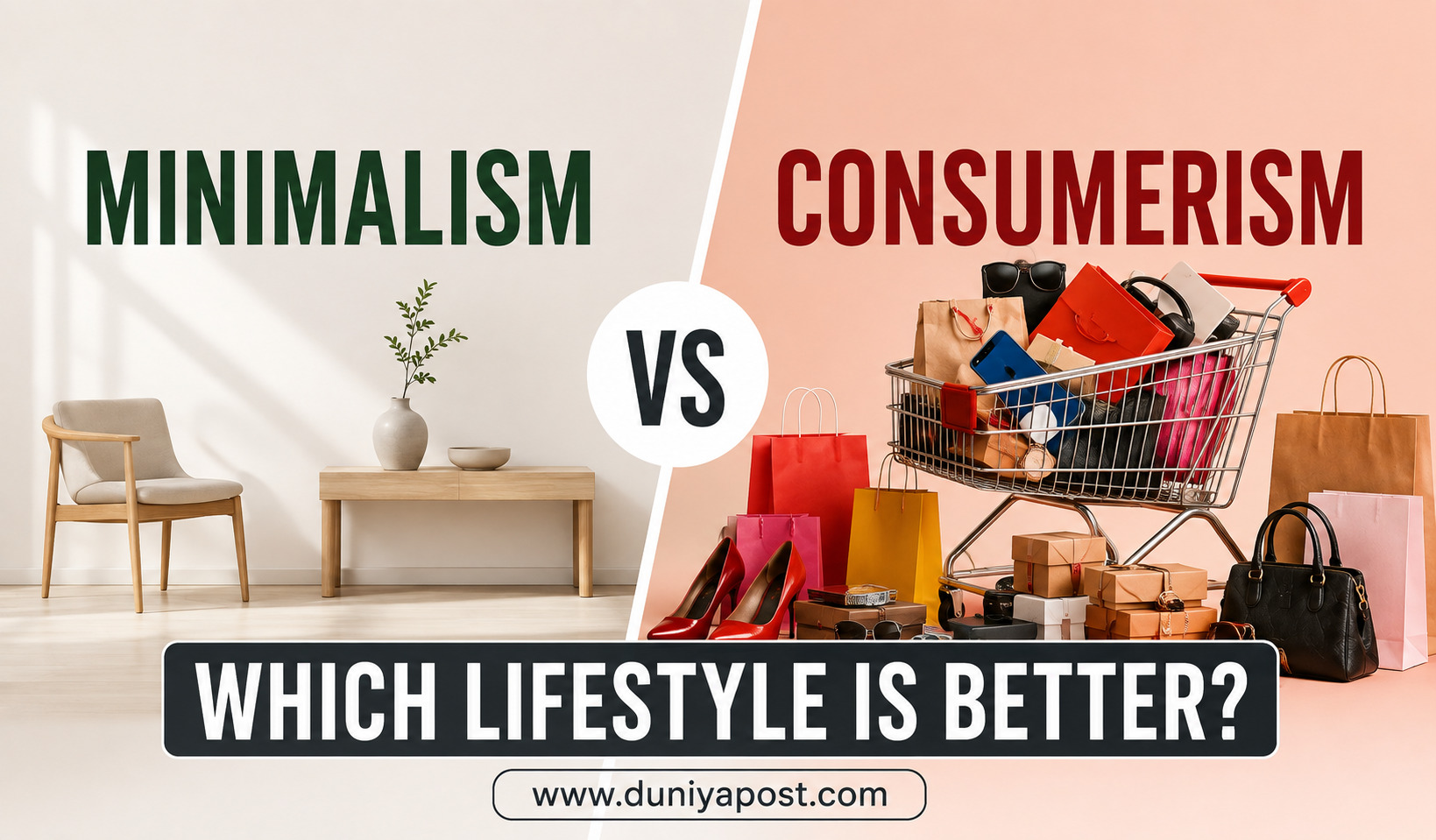
From the latest smartphones and fashion trends to home décor and online shopping, modern life constantly encourages us to buy more. Advertisements, flash sales, and social media influencers often promote the idea that happiness is just one purchase away. At the same time, another movement has been gaining popularity across the world minimalism. Instead of accumulating more possessions, minimalists focus on owning less and living with intention.
These two lifestyles represent very different approaches to money, possessions, and personal happiness. Consumerism celebrates choice, convenience, and continuous purchasing, while minimalism encourages people to simplify their lives by keeping only what truly adds value.
But does owning less automatically lead to a happier life? Is consumerism always a negative influence? The answer isn’t as straightforward as many people assume. Both lifestyles have their advantages and challenges, and the better choice often depends on individual priorities, financial goals, and personal values.
Understanding Minimalism
Minimalism is often misunderstood as living in an empty house with only a few belongings. In reality, it is less about the number of possessions and more about intentional living.
A minimalist chooses quality over quantity. Instead of buying things impulsively, they focus on purchasing items they genuinely need or use regularly. The philosophy extends beyond physical possessions and often influences time management, relationships, finances, and even digital habits.
For many people, minimalism creates a sense of freedom. Less clutter means fewer distractions, less time spent organizing belongings, and more room to focus on experiences, personal growth, and meaningful relationships.
However, minimalism is not about deprivation. It doesn’t require giving up hobbies, comfort, or modern conveniences. Instead, it encourages thoughtful decision-making before making a purchase.
What Consumerism Really Means?
Consumerism is a lifestyle in which buying goods and services plays a significant role in daily life. Modern economies largely depend on consumer spending, making consumerism an important driver of business growth, employment, and innovation.
Buying new products is not inherently harmful. Upgrading technology, investing in education, purchasing quality furniture, or supporting local businesses can all improve quality of life.
Problems arise when shopping becomes a habit driven by emotions rather than necessity. Stress, boredom, or social pressure can encourage unnecessary spending, leading to financial strain and clutter.
Consumerism becomes unhealthy when possessions begin to define personal success or self-worth.
The Appeal of Owning Less
One reason minimalism has gained popularity is the growing desire for simplicity in an increasingly busy world.
Many people discover that reducing unnecessary possessions makes everyday life easier. Cleaning takes less time, organizing becomes simpler, and decision-making feels less overwhelming.
Financially, buying fewer unnecessary items often allows people to save more money or invest in experiences such as travel, education, or hobbies.
Minimalism also encourages mindful consumption. Instead of making impulse purchases, people become more aware of how and why they spend their money.
This intentional approach often leads to greater satisfaction because purchases are based on genuine need rather than temporary excitement.
Why Consumerism Continues to Thrive?
Despite growing interest in minimalism, consumerism remains deeply woven into modern society.
New products bring convenience, comfort, and innovation. Advances in technology, healthcare, transportation, and home appliances have significantly improved everyday life.
Shopping can also be enjoyable. Buying gifts for loved ones, decorating a home, or investing in equipment for a favorite hobby can create positive experiences and lasting memories.
The challenge is maintaining balance.
When purchasing decisions are guided by practical needs and long-term value, consumerism can enhance life. Problems arise only when spending becomes excessive or emotionally driven.
The Financial Difference
One of the biggest distinctions between these lifestyles is how money is managed.
Minimalists generally spend more carefully. They often prioritize durable products over cheap alternatives and avoid buying multiple versions of the same item. As a result, they may spend less overall while building stronger savings habits.
Consumer-focused lifestyles, on the other hand, can lead to higher monthly expenses if purchases are made frequently or without planning. Credit card debt, impulse buying, and unnecessary subscriptions are common challenges for people who shop without clear priorities.
Neither lifestyle guarantees financial success. Wise spending habits matter far more than the label someone chooses.
Mental Well-Being and Everyday Stress
A cluttered environment can sometimes make everyday tasks feel more overwhelming. Many people find that simplifying their homes creates a greater sense of calm and helps them focus on what truly matters.
Minimalism often supports this feeling by reducing unnecessary distractions. Instead of managing countless possessions, people may have more time and energy for family, hobbies, and personal goals.
At the same time, consumerism can sometimes create pressure to constantly keep up with new trends. The desire to own the latest products or match the lifestyles seen online may lead to unnecessary stress and dissatisfaction.
However, it’s equally important to remember that owning nice things isn’t automatically harmful. If a purchase genuinely improves your daily life and fits comfortably within your budget, there’s no reason to feel guilty about it.
Environmental Impact
Lifestyle choices also affect the environment.
Buying fewer products generally reduces waste, packaging, and resource consumption. Many minimalists prefer repairing items, buying second-hand goods, or choosing products designed to last longer.
Consumerism, particularly when driven by fast fashion or disposable products, contributes to increased waste and higher demand for natural resources.
This doesn’t mean every purchase damages the environment. Supporting sustainable brands, choosing quality products, and avoiding unnecessary waste can make consumer habits far more responsible.
Thoughtful consumption often matters more than consuming less at any cost.
Is Minimalism Right for Everyone?
Minimalism has many benefits, but it isn’t the perfect solution for every lifestyle.
A professional photographer may need multiple cameras and lenses. A musician may own several instruments. Parents naturally accumulate children’s clothing, toys, and educational materials. Collectors often find joy in carefully building meaningful collections.
Owning more possessions isn’t necessarily a sign of consumerism if those items serve a genuine purpose or bring lasting value.
Minimalism should never become a competition about who owns the fewest belongings.
Finding a Healthy Balance
Perhaps the most practical approach lies somewhere between the two extremes.
You can enjoy modern technology, fashion, travel, or hobbies without becoming trapped in constant consumption. Likewise, you can embrace many principles of minimalism without feeling pressured to eliminate everything you own.
Before making a purchase, it can be helpful to ask a few simple questions. Do you genuinely need the item? Will it continue to add value months from now? Can you comfortably afford it without creating financial stress? If the answer is yes, the purchase may be worthwhile.
Making thoughtful decisions rather than emotional ones is often the key to a healthier relationship with money and possessions.
Final Thoughts
The debate between minimalism and consumerism isn’t about declaring one lifestyle the winner. Both offer valuable lessons when practiced with awareness.
Minimalism reminds us that happiness doesn’t always come from owning more. It encourages intentional living, financial mindfulness, and focusing on experiences over excess. Consumerism, when approached responsibly, supports innovation, convenience, personal interests, and economic growth.
Ultimately, the better lifestyle is the one that aligns with your values, supports your financial well-being, and contributes to a meaningful life. Instead of chasing every trend or rejecting every purchase, aim to become a mindful consumer, someone who buys with purpose, appreciates what they own, and understands that true satisfaction comes not from the number of possessions they have, but from how those possessions serve their life.
In a world filled with endless choices, the greatest luxury may not be owning more or less it may simply be knowing what is enough.