



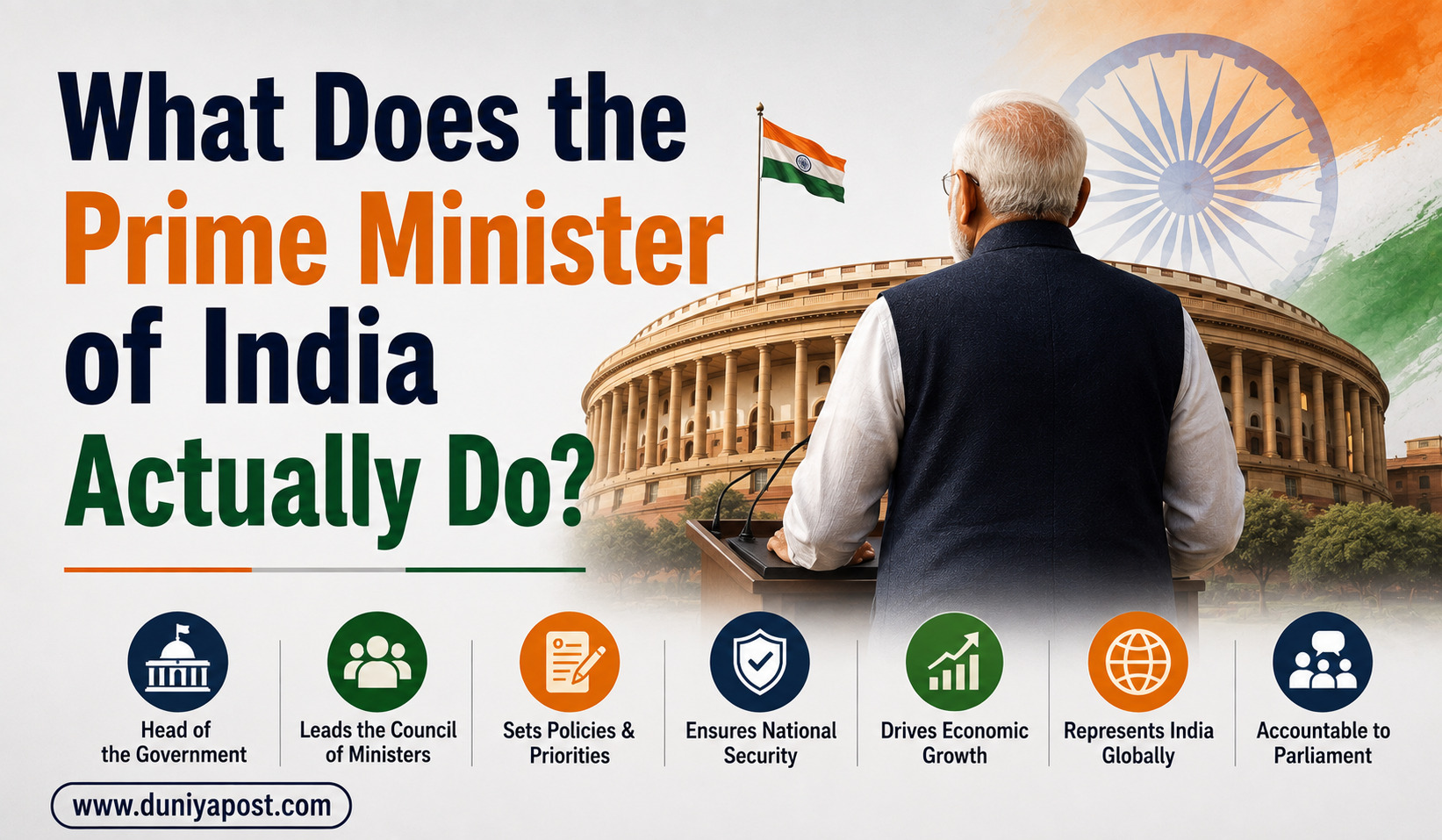
The Prime Minister of India is often regarded as the most influential political leader in the country. While the President is the constitutional head of the Union, it is the Prime Minister who leads the government, oversees policymaking, and coordinates the day-to-day administration of the nation. From economic reforms and national security to foreign relations and social welfare, the Prime Minister plays a central role in shaping India’s governance.
Many people associate the office of the Prime Minister with election campaigns and public speeches, but the responsibilities extend far beyond these visible aspects. The position involves leading the Council of Ministers, guiding Parliament, responding to national challenges, and ensuring that government policies are implemented effectively.
Understanding what the Prime Minister actually does offers valuable insight into how India’s parliamentary democracy functions and why this office is considered the driving force behind the country’s executive branch.
How Does Someone Become the Prime Minister?
India follows a parliamentary system of government. After a general election, the political party or coalition that secures a majority in the Lok Sabha is invited to form the government. The leader of that majority is appointed as the Prime Minister by the President of India.
Although the appointment is made by the President, the Prime Minister derives political authority from the confidence of the Lok Sabha. As long as the Prime Minister enjoys the support of the majority of elected members in the House, the government continues to function.
This system ensures that executive power remains closely linked to the democratic will of the people expressed through elections.
Leading the Union Government
The Prime Minister serves as the head of the Union Government and is responsible for coordinating its overall functioning. Every ministry, whether dealing with finance, education, defence, health, agriculture, or infrastructure, works within the broader policy direction established by the government under the Prime Minister’s leadership.
While individual ministers manage their respective departments, the Prime Minister ensures that all ministries work together toward common national objectives. This coordination is especially important when addressing issues that require cooperation across multiple departments.
Effective governance depends not only on individual policies but also on the ability to bring different parts of the government together, and this is one of the Prime Minister’s key responsibilities.
Head of the Council of Ministers
One of the most important constitutional responsibilities of the Prime Minister is leading the Council of Ministers. After assuming office, the Prime Minister recommends ministers to the President for appointment and allocates portfolios among them.
The Prime Minister also supervises the performance of ministers, reshuffles responsibilities when necessary, and helps maintain collective responsibility within the Cabinet. Since major government decisions are usually discussed in Cabinet meetings, the Prime Minister plays a crucial role in guiding these discussions and building consensus.
This leadership ensures that the government functions as a unified team rather than as separate ministries working independently.
Guiding National Policies
Every government introduces policies aimed at addressing the country’s economic, social, and administrative challenges. The Prime Minister plays a central role in setting these priorities and ensuring that they are translated into action.
Whether the focus is on improving infrastructure, strengthening healthcare, expanding education, encouraging industrial growth, promoting digital innovation, or addressing environmental concerns, the Prime Minister helps shape the overall direction of national policy.
Although policy decisions involve consultation with ministers, experts, and government departments, the Prime Minister often serves as the principal coordinator who aligns these efforts with the government’s broader vision.
Leading the Cabinet
The Cabinet is the highest decision-making body within the government. It considers major issues affecting the nation, including economic reforms, national security, foreign affairs, and important legislative proposals.
As the chairperson of Cabinet meetings, the Prime Minister sets the agenda, encourages discussion among ministers, and helps arrive at collective decisions. These meetings allow different ministries to share information, evaluate policy options, and coordinate implementation.
Cabinet leadership is therefore one of the most significant aspects of the Prime Minister’s role in governance.
Working with Parliament
India’s parliamentary democracy requires close interaction between the executive and the legislature. The Prime Minister is responsible for ensuring that the government remains accountable to Parliament.
Important government bills are introduced, debated, and passed through Parliament, and the Prime Minister often participates in discussions on major national issues. The office also helps coordinate legislative priorities and works with ministers to explain government policies during parliamentary sessions.
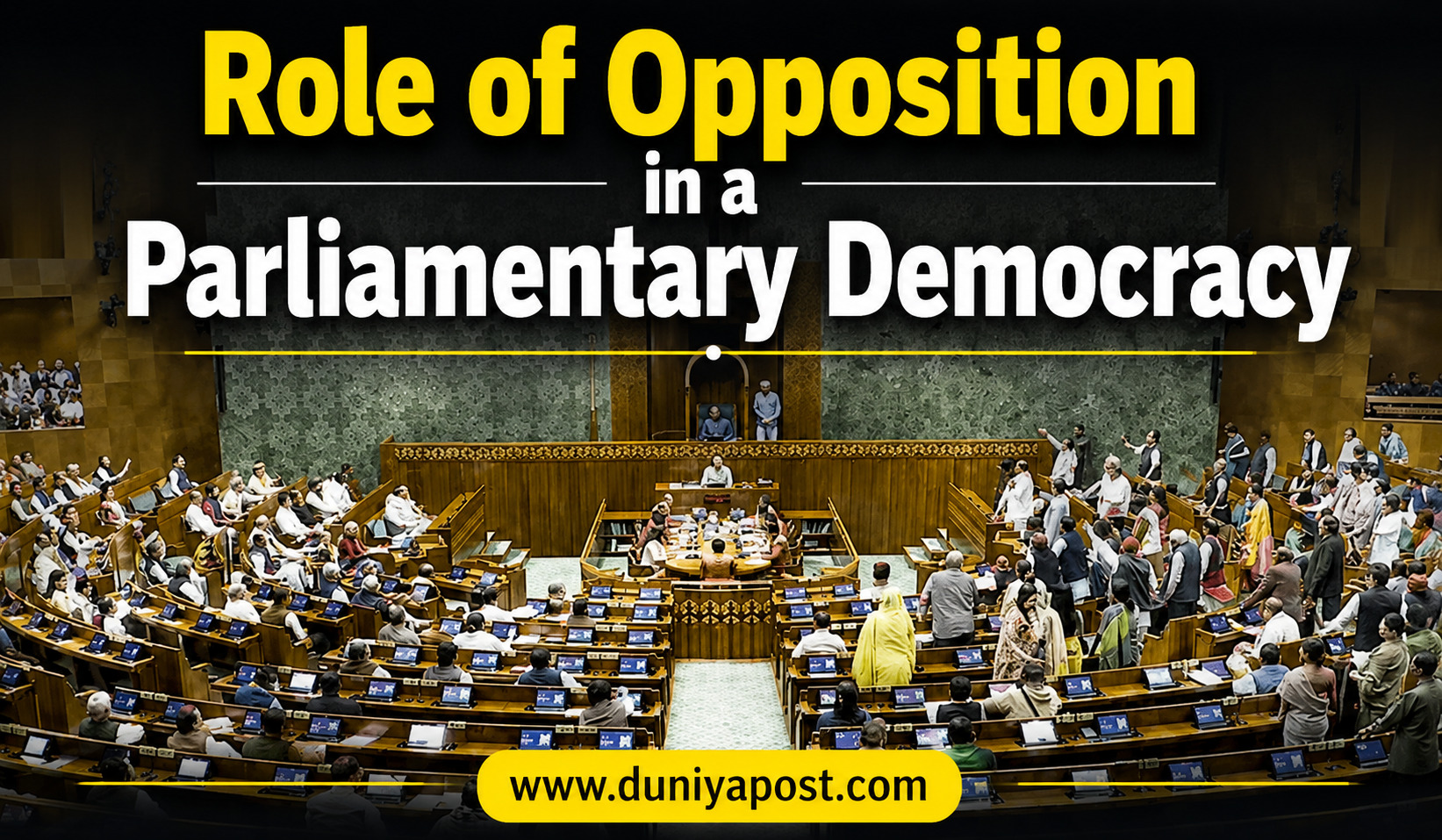
Parliamentary debates provide an opportunity for the opposition to question the government, making accountability an essential feature of democratic governance.
Representing India on the Global Stage
The Prime Minister is one of India’s principal representatives in international affairs. Meetings with world leaders, participation in international summits, and discussions on trade, security, climate change, and diplomatic relations are important parts of the role.
Foreign policy decisions involve multiple institutions, including the Ministry of External Affairs and the Cabinet, but the Prime Minister often leads high-level diplomatic engagement.
Strong international relationships contribute to economic cooperation, technological partnerships, regional stability, and India’s position in global affairs.
Responding to National Challenges
During periods of crisis, the Prime Minister provides leadership by coordinating the government’s response. Whether the country faces natural disasters, public health emergencies, economic difficulties, or security challenges, the office plays an important role in bringing together different agencies and ministries.
Timely communication, administrative coordination, and policy decisions become especially important during such situations. The Prime Minister works alongside experts, government officials, and state governments to ensure that appropriate measures are implemented.
The ability to respond effectively during challenging times is often viewed as an important aspect of national leadership.
Working with State Governments
Although India has a strong central government, it is also a federal nation where states enjoy significant constitutional powers. Many development initiatives require close cooperation between the Union Government and state governments.
The Prime Minister regularly interacts with Chief Ministers, particularly on issues involving infrastructure, healthcare, education, disaster management, agriculture, and economic development. Effective coordination between different levels of government helps improve policy implementation across the country.
Maintaining cooperative federalism is therefore an important part of the Prime Minister’s responsibilities.
Balancing Leadership with Accountability
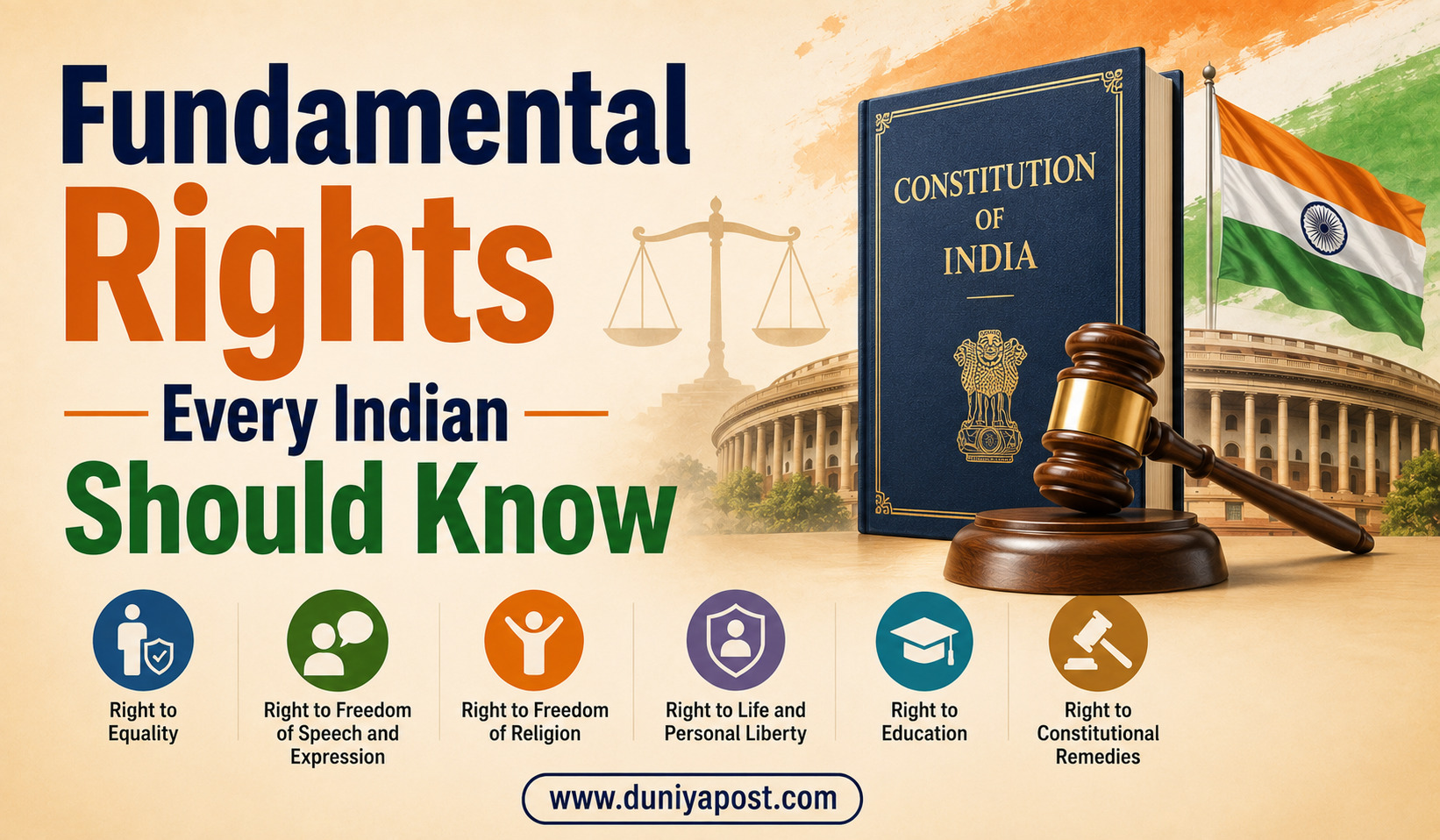
While the Prime Minister exercises considerable authority, the office is also subject to constitutional checks and democratic accountability. The government remains responsible to the Lok Sabha and must retain the confidence of the majority of its members.
The judiciary ensures that government actions remain consistent with the Constitution, while parliamentary debates, committee reviews, and public discussions contribute to transparency.
Regular elections also provide citizens with the opportunity to evaluate the government’s performance. This balance between leadership and accountability is a defining feature of India’s parliamentary democracy.
Challenges Faced by the Prime Minister
Leading a country as large and diverse as India presents significant challenges. The Prime Minister must address issues affecting urban and rural populations, manage economic development while ensuring social welfare, strengthen national security, and respond to global developments that influence the country’s interests.
Rapid technological change, climate-related concerns, employment generation, public health, education, and infrastructure development require long-term planning and effective coordination across multiple sectors.
At the same time, the Prime Minister must balance competing priorities while working within constitutional principles and democratic institutions.
Why the Office Matters
The office of the Prime Minister is central to India’s governance because it brings together political leadership and administrative responsibility. Decisions made by the government influence nearly every aspect of public life, from economic policies and infrastructure projects to education, healthcare, and international relations.
The Prime Minister’s role is not limited to making announcements or leading election campaigns. It involves continuous consultation, coordination, decision-making, and accountability. Every major policy requires careful planning, discussion with ministers and officials, parliamentary approval where necessary, and effective implementation.
As India’s economy grows and the country assumes a larger role in global affairs, the responsibilities associated with this office continue to expand.
Conclusion
The Prime Minister of India serves as the head of the government and the principal leader of the country’s executive branch. By leading the Council of Ministers, guiding national policies, coordinating government departments, representing India internationally, and ensuring accountability to Parliament, the Prime Minister plays a vital role in the functioning of the nation’s democratic system.
However, the office operates within the framework of the Constitution, where authority is balanced by parliamentary oversight, judicial review, and the democratic mandate of the people. This balance ensures that governance remains both effective and accountable.
Understanding the role of the Prime Minister helps citizens appreciate how decisions are made at the national level and how India’s parliamentary democracy functions in practice. More than a political position, it is an office that carries immense responsibility for shaping the country’s development, protecting its democratic values, and addressing the aspirations of over a billion people.